Buehlmann


16.05.2013Calprotectin ELISA Automation

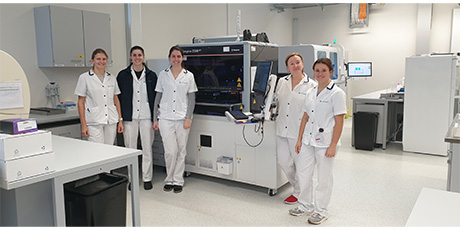
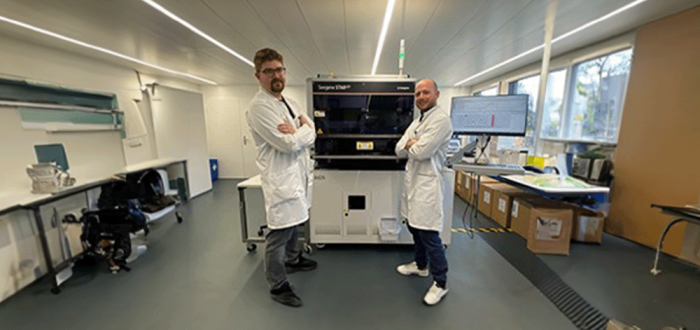
BÜHLMANN has set a focus on automation of its ELISA tests, starting with Calprotectin. A number of validated protocols are available on the commonly used ELISA robots. On top of that, BÜHLMANN is the only company that can offer CE marked application protocols on two DYNEX machines, the DS2 and the DSX. More CE marked application notes will follow. Please also follow this link to the CLI Newsflash, where we promote our Calprotectin ELISA automatisation.


Related Entries:
index
index
index
index
index

24.08.2012Interviews on calprotectin by BÜHLMANN on the National Health channel UK

TV programme on calprotectin diagnosis for IBD and BÜHLMANN Laboratories on the NHS National Health Channel in the UK. The interviews are scheduled to be broadcast within the documentary ‘NHS ADVANCES IN GASTROENTEROLOGY, ENDOSCOPY STOMACH HEALTH DIAGNOSIS’ which will be screened on the National Health Channel (Sky Channel 212 and Freesat Channel 402) on Sunday 26 August 2012 at 6:00 pm. Further screenings are on Monday 27th August at 5:30 pm, Wednesday 29th August at 12:00 pm and Saturday 1st September at 12:00 pm There will be further repeats of the programme with details yet to be confirmed. For direct links to the broadcast to watch anytime go here. To view the full programme of the documentary go here.


20.08.2012BÜHLMANN releases a new calprotectin test

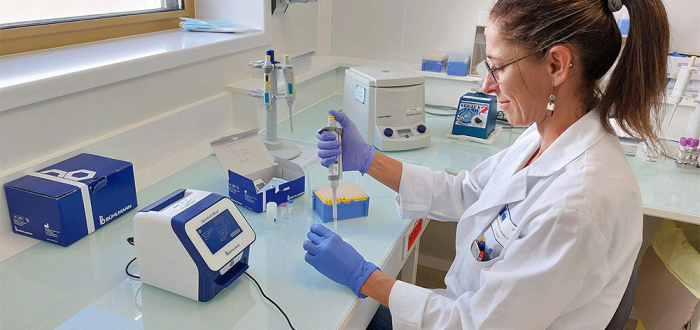
CALcheck Blue™ is a rapid qualitative screening test. Easy to use, with Quick Prep extraction, no pipetting, no vortexing , reaction time of 10 minutes to result. This is the next step by BÜHLMANN to complete the calprotectin portfolio with a primary care suitable screening solution for uncertain bowel disorders for IBD. CALcheck Blue™ correlates highly with the quantitative BÜHLMANN calprotectin ELISA and Quantum Blue®, thus giving the perfect tool for first assessment of inflammatory status.


27.07.2012Seegene’s TOCE Technology : The New Paradigm for High Multiplex Real-time Quantitative PCR.

High multiplex Real-time Quantitative PCR

TOCE™ (Tagging Oligonucleotide Cleavage Extension) is a robust, homogeneous, high multiplexing quantitative technology that overcomes many of the limitations of current real-time PCR. Based on Cyclic Catcher Melt Temperature Analysis (cyclic-CMTA), qTOCE™ is a novel application for high multiplex quantitation in a single tube on existing real-time platforms.

The profile of information generated by qTOCE™ can substantially accelerate informed healthcare decisions at a lower cost. As such, qTOCE™-based assays will cause a paradigm shift in molecular diagnostics, towards high content/high quality tests needed for optimal patient care.

Watch the movie about the unique TOCETm Technology, or get more information.


Related Entries:
Interviews from Dr. Christoph Noppen (Viollier, Allschwil) about the EGFR test from EntroGen and from Dr. Günter Dollenmaier (ZLMSG) about the Anyplex II RV16 test from Seegene
New Seegene DPO Movie showing how this unique and proprietary technology is working to allow innovative multiplexing.

31.05.2012Enzymatic GHB screening assay with improved reagent stability

The reagent on-board stability of the specific enzyme, GHB dehydrogenase, is significantly improved now. The enzyme is stable for 8 weeks even at storage temperature up to 15°C which is used in several clinical chemistry analyzers.

In the last few years the amount of seizures of GHB (gamma-hydroxybutyric acid) continuously increased. Besides the well described misuse as a date rape drug, GHB is more and more abused as a recreational/party drug.

This new assay attribute further support the implementation of the enzymatic GHB assay from BÜHLMANN as an important screening tool allowing the automated, easy and uncomplicated testing of suspected specimens. Screening tests can be offered 7/24 on any clinical chemistry analyzer without highly sophisticated knowhow and lab equipment.

This Improvement allows less re-calibration steps and gives a higher flexibility to you to fit it into your specific workload. Now you get the option to minimize the amount of the reagent dead volume to optimize the economic output. The new formulation of the enzyme shows highest comparability of the assay performance with the positive effect that less false positive screening results will occur.


29.05.2012New enzymatic Vitamin B6 assay is available now.

Today, reliable quantitation of vitamin status of a patient is done mainly with classical HPLC methods asking for time consuming and cumbersome sample precipitation and derivatization with highly toxic agents.

The new enzymatic vitamin B6 assay from BÜHLMANN offers highly comparable results with the advantage of batch-wise sample measurements within 45 minutes.

The assay employs a three reagent protocol and will be run on microtiter plates with the option of automation. A simple sample dilution step of the collected EDTA plasma is required before starting the assay.

Large surveys in the US (NHANES) showed that even in sections of population using regularly nutritional supplements a significant part shows low plasma PLP (vitamin B6) concentrations.

Low vitamin B6 status is associated with a large amount of very different diseases including cardiovascular disease, cancer, cognitive function, premenstrual syndrome etc.

Identified risk groups are individuals with impaired renal function, autoimmune disorders including rheumatoid arthritis, malabsorbtive diseases like celiac disease, crohn’s disease and ulcerative colitis and people with alcohol dependence. Furthermore, sever interactions with medications are known for people using Cycloserine (tuberculosis antibiotic), antiepileptic medications like valproic acid and carbamacepin, and Theophylline used for treatment of asthmatic diseases.


Related Entries:
index

23.03.2012INFINITI KRAS-BRAF study from the Basel Institut of Pathology published in the Diagnostic Molecular Pathology journal.

New publication about the INFINITI KRAS assay in the Journal Diagn Mol Path 21/1 2012 14-23, Bihl et al. In this study from the Institute of Pathology at the University Hospital Basel, the performance of the INFINITI KRAS assay has been compared to Dideoxy- and Pyrosequencing in a comparative manner, by investigating 100 colorectal carcinoma samples with known KRAS mutation status (62 mutated cases and 38 wild type cases). Targeting the epidermal growth factor receptor (EGFR) is a new therapeutic option for patients with metastatic colorectal or lung carcinoma. However, the therapy efficiency highly depends on the KRAS mutation status in the given tumor. Therefore a reliable and secure KRAS mutation testing is crucial.

The authors conclude that the INFINITI KRAS assay seems to be slightly more sensitive compared to Dideoxy- and Pyrosequencing. In addition the hands-on time to process the samples was clearly the shortest on the INFINITI.


Related Entries:
index
index
index
index
index

13.02.2012Recent publications on BÜHLMANN calprotectin assays

Three very interesting new papers have been published recently. Manz et al. describes the quality and usefulness of the BÜHLMANN calprotectin ELISA in an observational study to screen for organic vs. non-organic gut disease, which very impressively reflects the daily practice of screening unknown patients with abdominal discomfort. A real time, real life situation reflected.

Another brand new paper by Richard Fedorak in Alberta Canada, describes the use of BÜHLMANN ELISA and of Quantum Blue Rapid Test to distinguish IBD from IBS as well. The clear cut message here is that the Quantum Blue, just like the ELISA are very efficient and useful to do this job.

Finally in Clinical Biochemistry, Mirja Mindermark and Anders Larsson show the general health economic benefit of performing calprotectin assays as pre endoscopic screening, here with the BÜHLMANN ELISA. The take home message is, that by routinely performing calprotectin testing the number of endoscopies can be reduced to those really necessary ones and together with that the costs for health care providers significantly drop.


Next1-10/42